
A Piano Buyer’s Due Diligence Checklist That Works
A step-by-step due diligence checklist for acoustic pianos—evaluate tone, action, soundboard health, and service risk before you commit.
1) Start with a controlled audition: make tone and touch comparable

Brand reputation is a starting point, not a substitute for piano buying due diligence. Your goal is a fair comparison across different rooms and climates so you can judge tone consistency and touch without being misled by a flattering showroom. Bring the same short musical excerpts (soft legato, repeated notes, octave fortissimo, pedaled chords), play them on every candidate, and note what changes with dynamics.
Run a quick “repeatability” check: play the same excerpt twice, five minutes apart, after the instrument has settled. Listen for evenness from bass to treble, sustain length, and whether the tone stays stable when you change attack. Ask to close the lid (grand) or adjust the top panel (upright) to see if projection becomes harsh or stays balanced. This is quality assessment in real time: you’re looking for an instrument that remains musical, not one that only sounds impressive in one setting.
2) Inspect what you can’t hear immediately: action geometry, soundboard health, and seasonal risks

After the audition, switch to risk management: verify the mechanical and structural fundamentals that affect long-term reliability. Ask the seller or technician for regulation targets and recent service history, then do basic checks yourself. For action geometry, feel for consistent key dip and uniform resistance; uneven weighting, sluggish return, or “clicky” repetition can signal worn centers, mis-regulation, or humidity-related swelling.
For acoustic pianos, the soundboard and pinblock decide whether the instrument will hold stability after the first season. Look for soundboard cracks that separate or buzz under forte, ribs that show gaps, and bridges with visible splits or crushed cap wood. Test tuning stability: play unisons and octaves for shimmer, then ask when it was last tuned and how quickly it drifted. Key questions to ask: Has the piano lived in a controlled-humidity environment? Any prior plate removals? Are there documented pitch-raise events? These details predict whether your “great first day” becomes downtime later.
3) Document, compare, and negotiate: the checklist that protects your investment
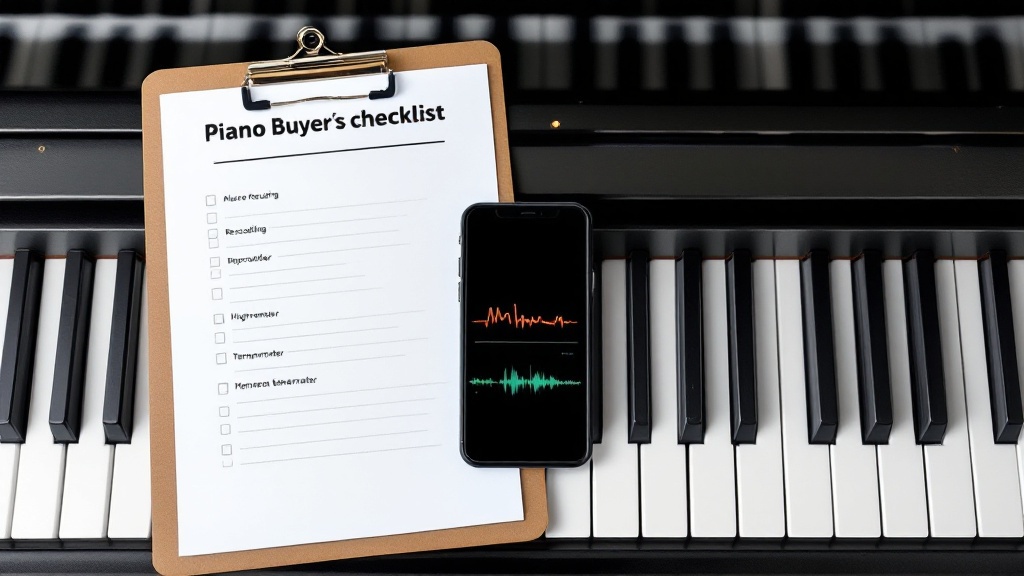
To make due diligence actionable, document every instrument the same way. Create a one-page sheet with: model/serial, room conditions (temperature/humidity), audition excerpts used, notes on tone consistency, action feel, and any noises. Record 30–60 seconds of identical playing from the same phone position; it’s not studio-grade, but it supports apples-to-apples quality assessment when memory fades. Photograph the plate stamp, soundboard areas of concern, and any cosmetic damage that could affect resale.
Then negotiate around measurable outcomes, not vague assurances. Request: a written pre-delivery regulation/tuning scope, a humidity guidance plan for your venue, and a service response standard. For institutions, insist on a single point of accountability for warranty and scheduled care. This is where a vertically managed program—like Heritage Resonance Pianos’ configured ordering plus certified lifecycle service—reduces purchase risk: your contract can specify delivery timing, post-install voicing, and recurring maintenance to prevent recital-week surprises. In commercial-investigation terms, the best deal is the one with the fewest unknowns.